rich

As a general rule, a person is not liable for the debts of their spouse,except for debts associated with necessities of life (i.e., medical debts) or debts that you voluntarily cosign.  Aside from medical debts and cosigned debts, you are not liable for the debts of your spouse.  You marry the person, not their debts. (Marrying for money is another story altogether.)

For this reason, it is not necessary or advisable for both spouses to file bankruptcy when only spouse is in debt.  However, when only one spouse files the bankruptcy and the other spouse spends lots of money on items that may appear extravagant or unnecessary, the bankruptcy trustee may scrutinize the debtor’s household budget.  And by the term “scrutinize” I mean the trustee may seek a dismissal of the case or push for a higher monthly bankruptcy payment.

So what right does a Trustee have to complain about expenses of the spouse who is not in bankruptcy? The spouse are not in bankruptcy, so why can’t he or she spend whatever they want?

In fact, bankruptcy courts struggle with this non-debtor spouse issue.  What makes these cases even more difficult is that the non-debtor spouse frequently has higher income and spends a great deal on expenses that, if eliminated, would enable the debtor to pay most if not all of their debts. That is a bitter pill for the trustees and courts to accept.

Courts look to several factors when reviewing the expenses of a non-debtor spouse:

  • Does the non-debtor spouse earn income?  When expenses of the non-debtor spouse seem excessive, the court will not approve a case when that spouse does not bring home income to pay for the expense.
  • Does the non-debtor spouse maintain a separate bank account?  Courts look to see what the non-debtor spouse normally contributes to household income.  If the couple share a single bank account the court may rule that all of the non-debtor spouse’s income is part of the debtor’s household income.
  • Proportionality.  Does the non-debtor spouse pay a percentage of the necessary household expenses in proportion to the income they generate as a couple?  For example, if the non-debtor spouse earns 60% of the family income but proposes to only pay 25% of the necessary household expenses, it is doubtful the case will be approved.
  • Ability to Curtail Expenses.  Even though a non-debtor spouse’s expenses may be outrageous, it may not be possible to reduce them.  If the spouse has a large student loan obligation that consumes most of their monthly income, the expense will be allowed since it cannot be eliminated.  On the other hand, entertainment expenses such as golf or travel may be more easily reduced or deferred.

When a high income non-debtor spouse is present, special caution and planning needs to be performed by the bankruptcy attorney.  It will be necessary to gather tax returns, paycheck stubs and bank statements of the spouse to explain the financial dealings of the debtor’s household.  Sometimes the attorney must gather a sworn statement of the spouse to explain why their income should not be combined with the debtor’s income in the bankruptcy case.

Hiring a Nebraska bankruptcy attorney who can spot the special issues of a non-debtor spouse is key to the success of a case.  Cheap bankruptcy attorneys who gloss over these types of issues are rarely cheap in the long-run.


house-for-sale

According to the headlines, the real estate market is red hot and some homes are selling in less than 24 hours for more than asking price.

Although we can celebrate the end of the housing bust of 2008, this rapid increase in home values can cause special problems for those folks filing bankruptcy.  Why is this a problem?  Because Nebraska homestead exemption laws protect a maximum of $60,000 of home equity in bankruptcy proceedings.

Most bankruptcy attorneys value real estate at the tax assessment value.  The problem is, many of those values were rolled back after the 2008 housing bust when homeowners complained that they could not sell their homes for anything close to the assessed values established during the housing boom.  But times have changed and assessed values have failed to keep pace with the rising housing market, so valuing real estate at tax assessment values can be dangerous.

Reviewing recent bankruptcy cases filed in Nebraska, I noticed differences in values reported on actual bankruptcy schedules versus the values reported by online services such as Zillow.com or Realtor.com.

Value Reported in Bankruptcy                    Zillow.com Value          Difference

$  88,376                                                               $ 128,339                     $  39,963

$ 254,000                                                              $ 308,711                     $  54,711

$ 30,400                                                                 $ 65,976                      $  35,576

When a bankruptcy attorney undervalues real estate by this much, tragic things can happen.  In Chapter 7 cases the Trustee has the power to seize homes that exceed the $60,000 homestead equity limit.  In Chapter 13 cases the trustee will demand that the monthly payment be increased by hundreds of dollars  to pay creditors the non-exempt equity.

I see a lot of sloppy bankruptcy schedules prepared out there.  When it comes to real estate, that type of laziness can be lethal.

Take for example how one attorney described a debtor’s residence:  “Homestead, 1302 South XX Street, XXXX, NE 681XX, value $130,000, mortgage balance $139,578.”  Does that really say enough?  Do you see a problem here?  Unfortunately, this is how about 90% of the cases are prepared.  (By the way, that home is valued at $165,537 by Zillow.  The bankruptcy schedules were off by $35,537!)

Imagine that you are a Chapter 7 bankruptcy trustee.  Your job is to interview each debtor who files a case.  You are paid $60 to review each case, but you are also paid a commission that starts at 25% for each unprotected asset you discover and liquidate.  Are you satisfied by the above description?  Probably not.  I would want to know a lot more about this property.

  • When was the property purchased?
  • What was the purchase price?
  • How big is the lot?  An acre? A city lot?  10 acres?  Yes, size matters.
  • When was the home built?
  • What is the tax assessment value?
  • Has the mortgage been refinanced recently?  If so, was the home appraised at that time?
  • What is the Zillow value?
  • Is there any damage to the home?

When a bankruptcy attorney leaves out this information on the bankruptcy schedule, the bankruptcy trustee starts drilling the debtor for answers at the court hearing.  I don’t trust bankruptcy schedules that lack detail, and neither do the Trustees. Cheap bankruptcy attorneys tend to prepare schedules that lack detail.  They tend to lose homes to trustees as well because of their lack of caution and thoroughness.

Great bankruptcy attorneys leave nothing to chance.  They develop systems and standard operating procedures to ensure that cases are prepared correctly, that assets are properly valued and that clients are alerted to possible dangers that may exist.

Be careful in your choice of bankruptcy attorneys.  Keeping your home may just depend on that choice.


Wells Fargo

Wells Fargo is asking courts to dismiss lawsuits brought by customers for damages caused by fake accounts created by bank employees because of arbitration clauses signed by those customers when they opened bank accounts.

A typical arbitration clause contained in the fine print of bank account agreements looks like this:

ARBITRATION AGREEMENT

Binding Arbitration. You and Wells Fargo Financial National Bank (the “Bank”), including the Bank’s assignees, agents, employees, officers, directors, shareholders, parent companies, subsidiaries, affiliates, predecessors and successors, agree that if a Dispute (as defined below) arises between you and the Bank, upon demand by either you or the Bank, the Dispute shall be resolved by the following arbitration process. However, the Bank shall not initiate an arbitration to collect a consumer debt, but reserves the right to arbitrate all other disputes with its consumer customers. A “Dispute” is any unresolved disagreement between you and the Bank. It includes any disagreement relating in any way to your Credit Card Account (“Account”) or related services. It includes claims based on broken promises or contracts, torts, or other wrongful actions. It also includes statutory, common law and equitable claims. A Dispute also includes any disagreements about the meaning or application of this Arbitration Agreement. This Arbitration Agreement shall survive the payment or closure of your Account. You understand and agree that you and the Bank are waiving the right to a jury trial or trial before a judge in a public court. As the sole exception to this Arbitration Agreement, you and the Bank retain the right to pursue in small claims court any Dispute that is within that court’s jurisdiction. If either you or the Bank fails to submit to binding arbitration following lawful demand, the party so failing bears all costs and expenses incurred by the other in compelling arbitration.

And the sad news is that some judges are actually going along with the bank and dismissing cases.

la-1474913687-snap-photo

Okay, we get it.  Arbitration clauses serve a legitimate purpose of reducing the cost of litigation between banks and its customers.  We can envision that such a provision may help reduce the cost of solving routine issues such as how interest is computed or when late fees apply or other issues regarding the terms of the contract.

But to apply the arbitration clause to fraudulent or even criminal wrongdoing committed by the bank seems to go way beyond what a reasonably prudent customer would anticipate.  Sure, I may expect the arbitration to cover nerdy issues of interest and fees, but do you mean to tell me that customer that is physically assaulted by a bank employee has agreed to binding arbitration when they open up a lousy $10 savings account?  If a rogue group of Wells Fargo collection agents take my daughter hostage until the account is paid, have a agreed to arbitrate this wrongdoing?

My expectation of an arbitration clause is that its application is limited to accounts that I voluntarily open with the bank.  The notion that I have somehow given Wells Fargo the right to arbitrate the murder my family or to open fake accounts without my knowledge is absurd.  The terms of the arbitration agreement are far too vague to permit that interpretation, and even if the terms were clear such an agreement clearly violates public policy and should not be enforced.

Despite some success the bank has achieved in cases so far, I suspect that courts will be reluctant to allow such a vast application of the arbitration agreements going forward.

Wells Fargo still doesn’t get it.  I’m hoping the courts do.


Might as Well Win it

Do you know where you want to be in 20 years? What does that picture look like?

When facing debt problems, it is very important to envision what you want your financial life to look like in 20 years.  Because when you fail to have a clear vision of what the ideal life looks like, you tend to repeat the present problem.  Sure, you may get out of today’s financial mess, but then old habits return and the problem resumes.

When facing that life changing debt struggle, it is very important to write down very specific financial goals.  Very specific goals.

  • I want my home paid off by age 55.
  • I will save up 6-months of wages in a savings account.
  • I want to take my grandchildren to the beach every summer until I die.
  • I want to quit my full-time job by age 60 and then work part-time and volunteer more.
  • I want to travel while I’m still young and healthy.
  • I want my student loans paid off before my kids start college.

Why is this important? Because knowing where you want to end up instructs you on what you need to do today.

Want to loose 10 pounds by summer? Then start walking 1 mile today, 2 miles tomorrow, and eat a healthy diet.

Want to pay off the home in 10 years? Well, you have 260 paychecks to get the job done if you are paid bi-weekly.  So, how much a paycheck does it require? (Find out here.)

Want to take a 2nd honeymoon in Cancun, Mexico in 12 months?  How much a paycheck does that cost?

See what just happened?  Your long-term goal affects what you do now.  That is why it is so important to set long-term financial goals.  Without them, you lose track of how to spend that paycheck.

When deciding about whether to file bankruptcy, keeping those long-term goals in mind is important. Sure, you could opt for a debt repayment program and become debt free over 5 years, but will that undermine the long-term goal of paying off student loans or a mortgage?

Solving today’s temporary financial problem is only part of the analysis.  Most people underestimate what they can accomplish over a long period of time. The difference between paying off a mortgage over 15 years instead of 30 years is usually about $100 per month.  That’s really not much more, so why not do it?  A lousy $20 investment per week in a 401(k) plan yields a substantial retirement. Eating 100 few calories per day results in substantial weight loss over a year.

Tell me where you want to be in 20 years and I’ll tell you what you need to do with your money today.

There is only one day in your life that you have power over money, and that day is payday.  What you do or fail to do on payday determines whether you win or lose. Decide to win today.

Champions team

Do Chapter 13 payment plans really work?  How many customers actually finish the plan and become debt free?  How does it stack up to other options like consumer credit repayment plans? If you don’t know how likely a plan of action will succeed, how do you know what to do?

Historically, only one in three chapter 13 cases are completed nationwide.  That is a pretty bad success rate in my opinion.  Law professor Katherine Porter (@bankruptprof)  wrote a provoking article about chapter 13 success rates in 2011 that basically called for an elimination of chapter 13 cases.  Her study confirmed the dismal success rate of these cases.

Chapter 13 is a pretend solution.  I use this term to mean a social program that does not work as intended but is not critiqued or reformed because its flaws are hidden.

That study always struck me as wrong.  It seemed wrong because we were achieving a much higher success rate in Nebraska and in our firm’s cases.  It seemed wrong because chapter 13 has so many advantages over chapter 7 that allow debtors to stop foreclosures, retain work vehicles and basically even the playing field against big bill collectors.

So I began to review success rates of bankruptcy cases and other debt solutions.  In reviewing the 283 Chapter 13 cases our firm filed in 2011, our clients obtained chapter 13 discharges in 198 of those cases.  That is a 70% success rate!  Chapter 7 success rates are even higher.  Of the 321 chapter 7 cases our firm filed in 2011, clients received discharges in 320 cases.  That is a 99% success rate.

Bankruptcy Judge Brian D. Lynch reports a similar success rate for cases filed in the bankruptcy court for the the Western District of Washington.  (See Measuring Success in Chapter 13)    Another study by Ed Flynn of the American Bankruptcy Institute (Chapter 13 Revisited) revealed a nationwide chapter 13 completion rate of 50% for confirmed cases.

HOW DOES CHAPTER 13 STACK UP TO OTHER DEBT SOLUTIONS?

It is important to know the average success rate before starting a debt program.  Here is what our studies indicate:

  • Chapter 7.  Nationally, about 95% of chapter 7 cases complete successfully.
  • Chapter 13.  It varies a lot from state to state and from law firm to law firm.  Success rates vary from 40% to 70%.
  • Credit Counseling Payment Programs.  This is a hard figure to track since the credit counseling industry does not publicly report their success rate. But industry insiders report success rates of 20% to 25%.   (See this article:  Does Credit Counseling Work?)
  • Debt Settlement.  The “save-up-and-settle” programs are basically a scam with success rates well under 10%.
  • Dave Ramsey Debt Snowball Plan.  There is absolutely no reliable information about the success rate of these programs.  I would estimate that only about 1 in 3 of those folks who begin this program become debt free.

WHY DO SOME BANKRUPTCY FIRMS HAVE HIGHER SUCCESS RATES?

Success is no accident.  Some attorneys just work harder at it and have a higher commitment rate to clients.  In every chapter 13 case there comes a time when a client needs help.  Clients get injured and they lose jobs or go through divorce and they face many other problems that can cause a payment plan to fail.  Successful chapter 13 attorneys have many tools to help clients through temporary problems:

  • Motion to Suspend Payment.  From time to time a debtor may ask the court to stop or reduce the bankruptcy payment if good cause exists.
  • Amended Plans.  When income decreases due to lower paying jobs or expenses increase due to medical problems, the original plan may be amended to make the payment affordable.  Skilled attorneys know how to adjust payments when circumstances change.
  • Home Loan Modifications.  Chapter 13 can stop a home foreclosure and give a homeowner extra time to modify their home loan.  When home loans are modified the monthly bankruptcy payment can be lowered typically.
  • Referrals to Tax and other professionals.  A good chapter 13 attorney can refer clients to other skilled professionals.  Perhaps a client needs great accountant to prepare tax returns.  Perhaps a good real estate agent is needed.  Getting clients to the right professional help is key.
  • Understanding the Real Cause of Financial Problems.  Money problems are often secondary.  Listening to your client and helping guide them through difficult times can make a real difference.

Does chapter 13 work?  The evidence is overwhelming.  In the hands of a skilled attorney, chapter 13 is a very real debt solution.

wells-fargo-scams

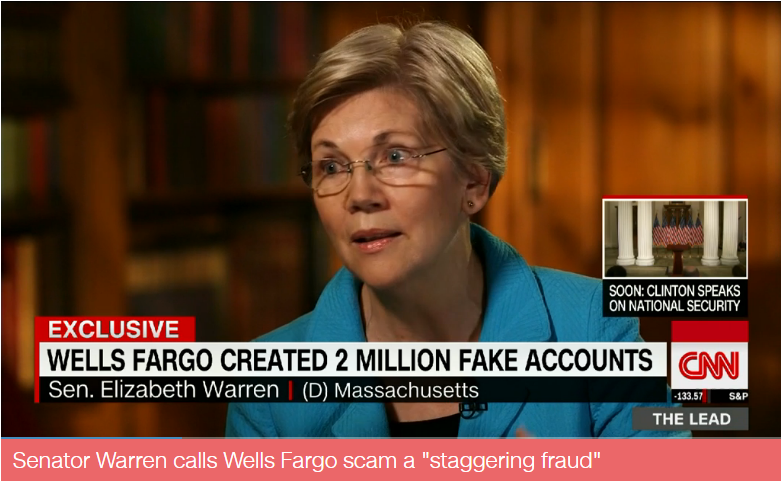
Wells Fargo Bank has admitted to opening millions of customer accounts and credit card accounts without customer authorization since 2005.  Stories have emerged of a bank gone wild where employees working in an intense sales culture felt pressured to open new accounts to meet sales quotas.

Wells Fargo has agreed to pay $185 million in fines to the Consumer Financial Protection Bureau.

So what happens when customers file bankruptcy on credit card accounts fraudulently opened without any authorization?  Naturally, Wells Fargo filed bankruptcy Proof of Claims with the court itemizing the amounts not legally owed.  And that reality leads to the next logical question:  Has Wells Fargo committed bankruptcy fraud for filing false proof of claims?

False Claims—18 U.S.C. § 152(4):

A person who…knowingly and fraudulently presents any false claim for proof against the estate of a debtor, or uses any such claim in any case under title 11, in a personal capacity or as or through an agent, proxy, or attorney;…shall be fined…, imprisoned…, or both.

It would be hard for Wells Fargo to argue that it has not “knowingly and fraudulently” presented false claims in bankruptcy proceedings since they authored the false debt.

HOW DOES A BANKRUPTCY ATTORNEY IDENTIFY FRAUDULENT WELLS FARGO CLAIMS?

A tougher question for bankruptcy attorneys is how they will be able to distinguish valid claims filed by Wells Fargo from the fraudulent claim.  All the claims look the same, so how do you tell the difference?

Most claims filed in bankruptcy cases do not attach copies of signed credit agreements, so it is unlikely that clients will be able to spot fraudulent claims either.  Signed credit agreements are becoming a thing of the past and it is extremely rare for a proof of claim to include a copy of a signed revolving credit card agreement.

The Wells Fargo scandal highlights a major problem with this new age of “inferred consent” in the credit card industry.  As the the industry has moved away from traditional signed credit agreements to modern methods of assent over the phone or internet, it becomes increasingly difficult for consumers to deny liability for revolving credit accounts.  Increasingly, credit card bill collectors sue not under traditional breach of contract legal theories but under Account Stated doctrines where liability is claimed because the liability is stated in monthly account statements.

So, if a Wells Fargo Proof of  claim does not attach copies of signed credit agreements, how can we be sure the debt is real?  How should debtor attorneys react to all Wells Fargo claims?  Should objections be automatically filed to every Wells Fargo claim until they can be verified?  If no written agreement can be produced, should it be assumed that the debt is invalid?  Should the bank be entitled to recoup the money loaned without interest under some type of Quantum Meruit or Unjust Enrichment theory?

This latest Wells Fargo scandal poses a major dilemma for Wells Fargo, bankruptcy attorneys and the court.   Generally speaking, the filing of a proof of claim is prima facia evidence of the validity of a debt.  Does that legal presumption belong to Wells Fargo claims going forward?

Champions team

Does Chapter 13 work?  How successful are these cases?  What is the chance of your case being approved by the court? And how are you to decide if filing Chapter 13 is good decision if you have no sense of how often these cases get approved and completed?

I recently reviewed all the bankruptcy cases my firm filed in 2011 to measure our success rate.  Why go back to 2011? Because Chapter 13 cases can last as long as 5 years, so you have to go back that far to count how many cases completed successfully and how many crashed and burned.  The results were amazing, even to someone who works in these cases every day.

Nationally, only about 30% of all Chapter 13 cases receive a discharge.  That’s not a great success rate in my book.  The success rate varies from state to state, and the Trustee and Judge assigned to a case greatly affect the outcome.  In Nebraska I have heard it said that about 60% of Chapter 13 cases result in a discharge.  The Discharge is the order entered at the end of a bankruptcy case that wipes out unpaid debt when a debtor makes every required required monthly payment. Chapter 13 cases require a monthly payment over a 3 to 5 year period of time.

In reviewing the 283 Chapter 13 cases our firm filed in 2011, our clients received a Chapter 13 discharge in 198 of those cases.  That is a 70% success rate!  When you consider how many of those clients went through significant life changes during that time such as loss of job, divorce, medical emergencies, depression, alcohol abuse, problems with children, etc., the success rate is amazing.

The success rate of chapter 7 cases is even higher.  Of the 321 Chapter 7 cases filed, 320 received chapter 7 discharges. That is a 99% success rate!

What about the 30% of chapter 13 cases that did not complete?  Of the 283 chapter 13 cases we filed, 80 did not receive a chapter 13 discharge. Five clients converted their case to chapter 7 and received a discharge.  Twenty clients eventually filed another bankruptcy.  So, if we count the cases converted to chapter 7 and the clients who just filed another bankruptcy to get a discharge, the success rate goes up even more.

What was interesting about the 80 cases that did not complete the chapter 13 process, 55 of the clients did not convert to chapter 7 or file a new bankruptcy later.  What happened to those 55 clients?  There are several answers to that question. First, you would assume that the creditors would go back to suing and garnishing those clients, but in fact that was not the case.  It appears that most creditors simply write off an account once a bankruptcy case is filed and they do not reopen collections when a bankruptcy is dismissed without a discharge.  So, even a dismissed chapter 13 case did produce a positive affect of causing bill collectors to fade away.  Other dismissed were often filed to stop a pending home foreclosure and did not involve much other debt.  It must be assumed that a foreclosure was completed after the case was dismissed and there was no further need to be in bankruptcy.

SUCCESS RATE OF OTHER DEBT RELIEF ALTERNATIVES:

The importance of knowing the bankruptcy success rate is that it enables one to compare it to other forms of debt relief.  It is generally estimated that Consumer Credit Counseling programs (also called Debt Management Programs) have about a 25% success rate.  Only one if four debtors who enter a credit counseling payment plan complete the program.  That is a poor success rate in my opinion.

Debt settlement programs generally have the worst success rate of less than 10%.  The save-up-and-settle programs almost never work.

WHY DO SOME BANKRUPTCY FIRMS HAVE HIGHER SUCCESS RATES THAN OTHERS?

High chapter 13 success rate are not accidental.  At some point almost every case we handle encounters a problem. Clients lose jobs or they get sick or injured or they deal with family stress and divorce matters or depression and other problems.  A three to five year case is long.  A skilled bankruptcy attorney, however, can do several things to keep a case going during bad times:

  • Motion to Suspend Payments. Your attorney may ask the court to suspend payments for good cause.
  • Amended Plans.  Sometimes the original plan is no longer feasible.  Perhaps a monthly payment should be lowered for 6 months while a client recovers from a car accident or illness.
  • Motion to Shorten Plans.  When clients become disabled or other hardships cause a permanent drop in income, in certain cases the length of a case may be shortened, even if the original plan was required to last five years.
  • Home Loan Modifications.  Chapter 13 cases stop foreclosure actions, and that may give a homeowner the necessary time to refinance their home through the Home Affordable Loan Modification Program (HAMP).
  • Referrals to tax and other professionals.  Sometimes you need a great accountant to file or amend tax returns. Sometimes you need a great real estate agent to sell a home quickly.  Sometimes you need to hire a great family attorney or counselor.  A good bankruptcy attorney is connected to other great professionals.
  • Creative Lawyering.  There are written rules and then there are the “unwritten rules.”  A good bankruptcy attorney has a few tricks in the bag they can’t talk about, but that’s why you hire them.  They have experience that helps them ethically navigate around barriers others crash into.  Experience matters.